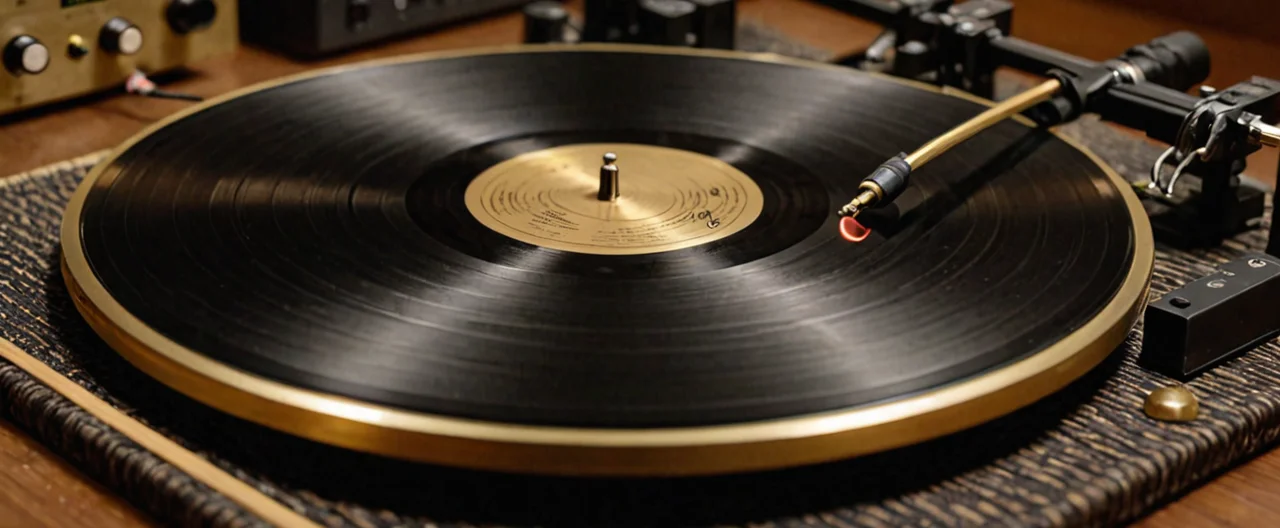
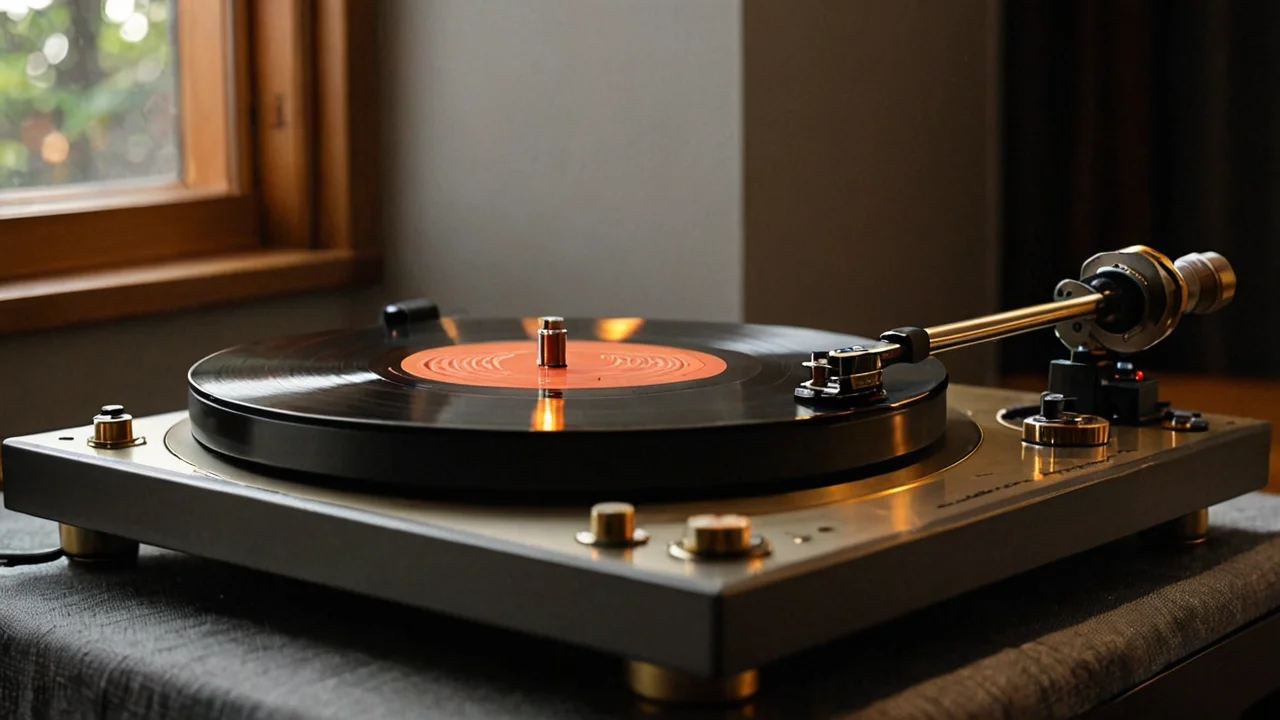
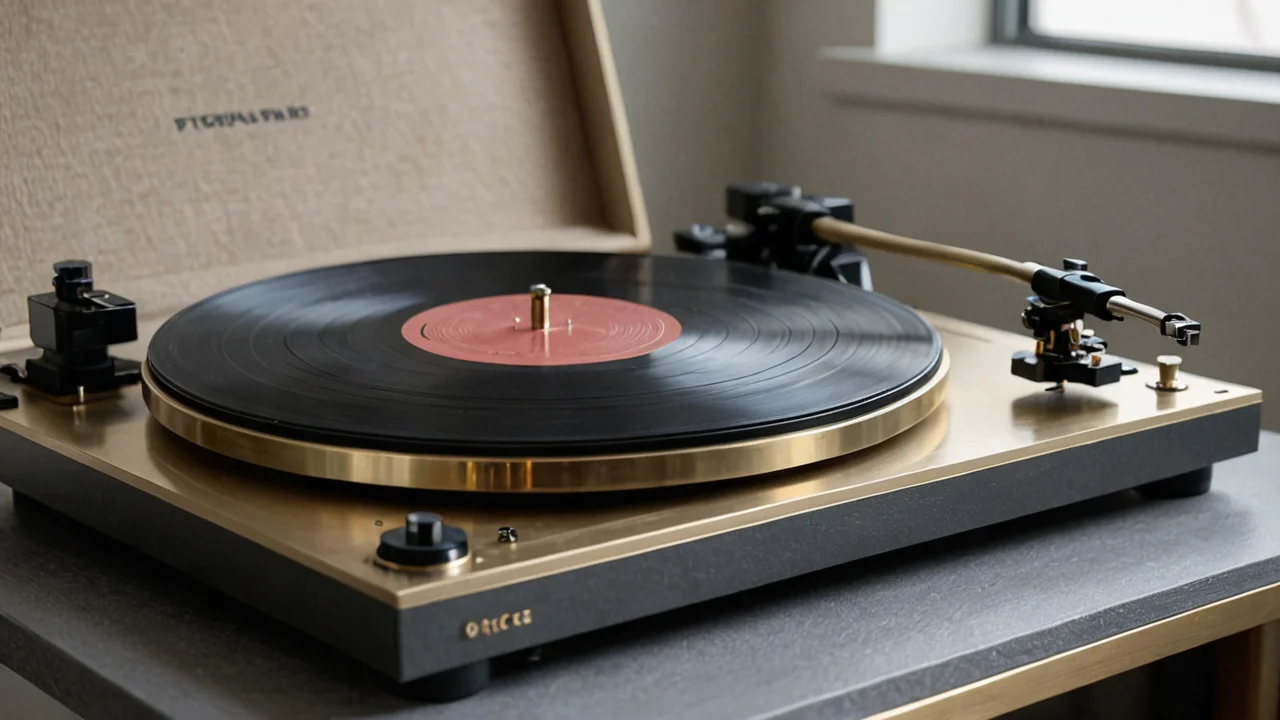
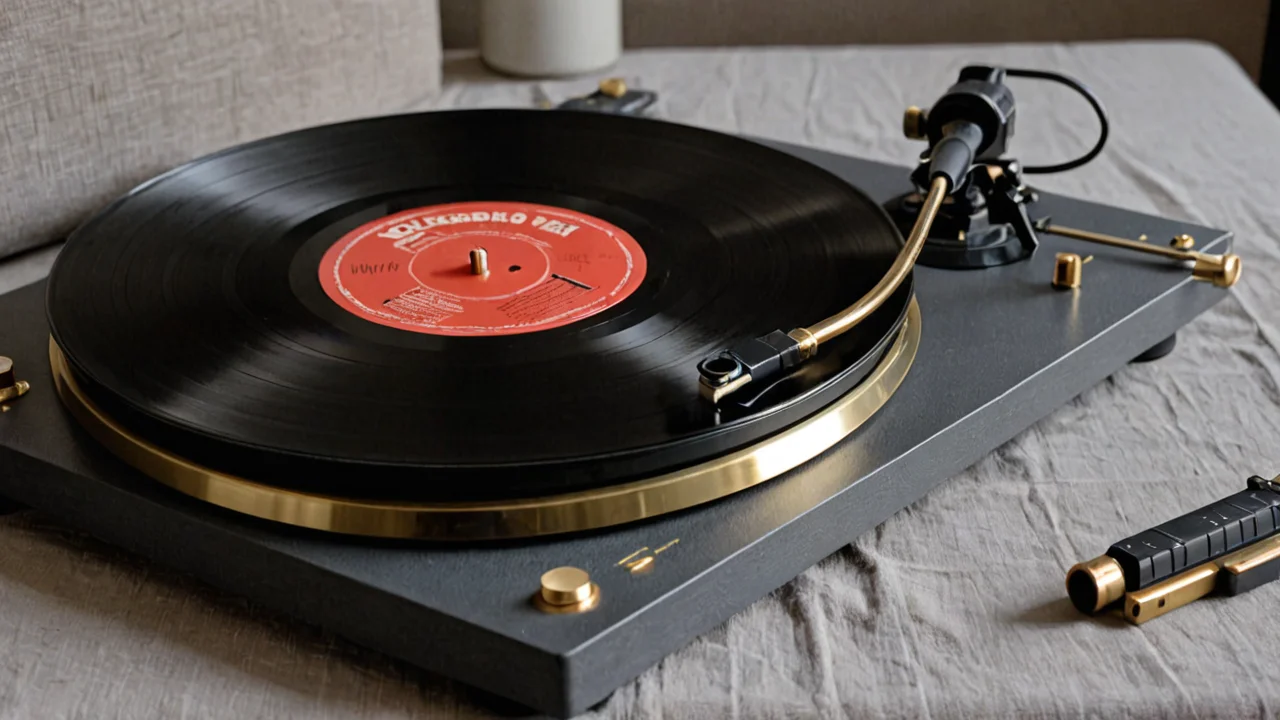
A specialized vinyl system is one where a single component is chosen to do one job unusually well — a mono cartridge for mono records, a high-output moving coil for a low-noise phono stage, a heavy plinth for a suspended-floor room — and every other part of the chain is then set up around that choice rather than around a generalist compromise. The payoff is real but narrow: you get more of the thing you asked for and less of everything else. The cost is that the system becomes interdependent, so a change anywhere forces recalibration everywhere.
The chain, and where a specialized system departs from it
A turntable spins the record at a constant speed and, with the tonearm, cartridge and stylus, turns groove modulations into an electrical signal that a phono preamp must amplify and equalize before anything reaches the speakers. That is the whole job. A generalist system tries to do it with components that are competent across the widest range of records and rooms. A specialized system deliberately narrows that range and buys performance inside the narrow band.
The places where specialization actually happens are few. The cartridge is the obvious one, because it is the transducer and because swapping it changes the electrical load the preamp sees. The tonearm is the second, because effective mass has to match the cartridge's compliance or the pairing misbehaves at the low end. The phono stage is the third, and it is the one people under-weight: a moving-coil cartridge with low output demands gain and a loading option that a fixed MM-only stage cannot give it. The turntable itself — plinth mass, suspension, bearing, drive type — is the fourth, and it is where the room starts dictating the choice rather than the records.
The honest framing is that specialization is a matching problem before it is a quality problem. A cartridge outside its recommended tracking force range will mistrack no matter how good it is. A high-compliance cartridge on a heavy arm will resonate in the audible band. A low-output MC into an MM input will be quiet, thin and noisy. None of these are failures of the component; they are failures of the system around it.
The limit: if you own a broad record collection spanning decades, labels and pressing qualities, a heavily specialized system will flatter some of it and expose the rest. The narrow system does not make bad pressings worse in any mysterious way — it just stops smoothing over them.
Cartridges are where most of the deciding happens
Pick the cartridge first if you are building around a specialization, because everything downstream is sized to it. Two common reference points show how much the numbers matter. The Audio-Technica AT-VM95E, which ships on a great many entry and midrange turntables, wants 1.8–2.2 g of tracking force with 2.0 g as the standard setting, and it specifies a vertical tracking angle of 23°. The Ortofon 2M Red, a moving-magnet design in the same broad market, wants 1.6–2.0 g, with 1.8 g (18 mN) recommended.
Those ranges are not suggestions to be split down the middle and forgotten. Tracking force is the downward pressure the arm and cartridge exert on the stylus, measured in grams or millinewtons, and it has to sit inside the manufacturer's window to balance accurate groove tracing against wear on both the record and the stylus. Run light and the stylus skips and chatters in loud passages, which damages the groove. Run heavy and you trade stylus life and record life for stability. The VM95E's range is 0.4 g wide; the 2M Red's is also 0.4 g wide but sits lower. On a tonearm whose scale is coarse or whose anti-skate is approximate, that window is tighter than it looks.
Tracking ability is the number that tells you what the force buys. Ortofon rates the 2M series at 70 µm at 315 Hz at the recommended tracking force — a measure of how well the stylus stays in the groove on a test record at that frequency and amplitude. It is a comparative figure, not a guarantee about your records, but it is the closest thing to a specification of composure under demand.
Frequency response is where the AT-VM95E states its case plainly: 20–22,000 Hz. That is a full-band claim. What it does not tell you is how flat the response is across that band, which is the thing you actually hear — a cartridge can cover the range and still tilt bright or thick.
The trade-off with moving-coil specialization is gain and loading. MC cartridges are commonly low output, and a stage that cannot supply enough clean gain will make the whole exercise sound worse than the MM it replaced. The limit: if your phono stage has no loading options, an MC is the wrong specialization and an MM with a known, stable character is the right one.
Alignment and setup: the part that decides whether the specialization works
Set tracking force with a scale, not the arm's printed dial, then set anti-skate to match, then verify alignment — in that order, because each step depends on the last. A cartridge that is correctly forced but skewed in the headshell will mistrack on one channel before the other and will wear the groove unevenly in a way you cannot hear until it is done.
Vertical tracking angle is the alignment figure people skip. The AT-VM95E specifies 23°, and VTA affects both alignment and how the stylus contacts the groove wall. In practice you adjust it by raising or lowering the back of the tonearm, which changes the arm's angle relative to the record. Small changes matter; a record of different thickness changes it too. This is why serious setups keep a note of the arm height that worked and return to it.
The stylus itself is a wear item. It is the small tip, usually diamond, that sits in the groove and vibrates with the modulations, attached to the cantilever inside the cartridge. It must be kept clean and periodically replaced to avoid record damage — and the failure mode is insidious, because a worn stylus often still tracks and still makes sound while quietly polishing away high frequencies from everything it plays.
What goes wrong and how you notice: mistracking shows up as distortion on loud inner-groove passages and on sibilants, not as an obvious skip. Channel imbalance from misalignment shows up as a shrunken centre image. A stylus with a build-up of debris shows up as a dulled top end that improves for one side after cleaning and then returns. Each of these is a setup fault, not a component fault, and each is cheaper to fix than an upgrade.
The cost of doing this properly is time and a couple of inexpensive tools — a tracking-force scale and an alignment protractor. The limit: alignment cannot rescue a cartridge that is fundamentally mismatched to the arm's effective mass, and no amount of care will make a worn stylus new.
Matching the phono stage to the cartridge, not the other way round
Choose the phono stage after the cartridge, and choose it on gain and loading rather than on reviews. The preamp has one job in the specialized system: apply the RIAA equalization and enough clean gain to bring the cartridge's output up to line level without adding noise that the rest of the system will amplify. If the cartridge is high-output, almost any competent MM stage will do. If it is low-output, the stage needs the gain and the loading options to suit it, and those are not features you can add later.
The common mistake is buying the cartridge for its reputation and the stage for its price, then discovering the combination is noisy or thin. The symptom is a system that sounds fine on quiet acoustic records and falls apart on dense, loud ones — which is the opposite of what a specialized system is supposed to deliver.
Loading is the adjustment most people never touch. Changing the resistive and capacitive load a cartridge sees shifts its frequency response at the top end. It is not a tone control and should not be used as one, but it is the difference between a cartridge that sounds right in your system and one that sounds bright or closed in someone else's.
The trade-off is flexibility against cost. A stage with switchable gain and loading costs more than a fixed one and adds a step to setup. The limit: if you never intend to change cartridges, a fixed stage matched precisely to your one cartridge is the better buy and the simpler system.
The turntable and arm as a supporting structure
The turntable's contribution to a specialized system is stiffness and speed stability, not features. What you are buying is a platform that does not move and a bearing that does not rumble, because every vibration that reaches the platter arrives at the stylus as signal it did not ask for. A heavy, well-damped plinth and a solid shelf do more for a specialized cartridge than a more expensive cartridge does on a resonant, bouncy surface.
The arm's job is effective mass matching. High-compliance cartridges suit lighter arms; lower-compliance cartridges suit heavier ones. Get this wrong and the arm-cartridge system resonates at a frequency where record warps and footfall live, and you hear it as a wobble or as mistracking on warped records. You cannot fix this with tracking force, and you cannot fix it in the phono stage.
Speed stability is the other structural requirement, and it is easy to test: a sustained piano note will beat and waver audibly if speed is drifting, in a way that a sustained bass note will not reveal. The cost of getting this right is mass and money, and the practical constraint is that a heavy turntable needs a shelf or wall mount that can carry it.
The limit: past a certain point, turntable upgrades stop being audible through a modest cartridge, and cartridge upgrades stop being audible on a wobbly platform. Spend in the order the signal travels, but only after the platform is stable enough not to waste the money.
Where specialization stops paying and when to stay generalist
Stay generalist if your records are mixed, your room is shared, and your listening is background-to-attentive rather than analytical. A competent MM cartridge set correctly within its range, a stable turntable and a clean MM phono stage will handle almost everything, and the money saved is better spent on records.
Specialize when one constraint dominates. If you listen mostly to mono pressings, a mono cartridge removes a whole class of noise and distortion. If your room has a suspended floor and footfall is a problem, the specialization is the platform, not the cartridge. If your phono stage is the weak link, fix that before anything else, because no cartridge can outrun a noisy input.
What specialization costs, honestly stated: it narrows the range of records the system flatters, it makes every future change a recalibration, and it makes diagnosis harder because more variables are coupled. It also tends to cost more per unit of improvement, because you are paying for performance in a band rather than across the board.
The sequence that works is unglamorous. Confirm the turntable is level and stable. Set tracking force with a scale inside the manufacturer's range — 1.8–2.2 g for an AT-VM95E, 1.6–2.0 g for a 2M Red — and set anti-skate to match. Verify alignment, including vertical tracking angle where the arm allows it. Clean the stylus before every side and inspect it regularly, replacing it as a wear item. Only then decide whether a specialization is the right next move, and pick the one that addresses the constraint you can actually name.
The limit of the whole approach is that a specialized system is only as good as its weakest match. The most expensive cartridge in the world, forced outside its range on an arm of the wrong mass into a stage without enough gain, will sound worse than a modest one set up correctly — and the difference is not subtle. Set the system before you specialize it.