
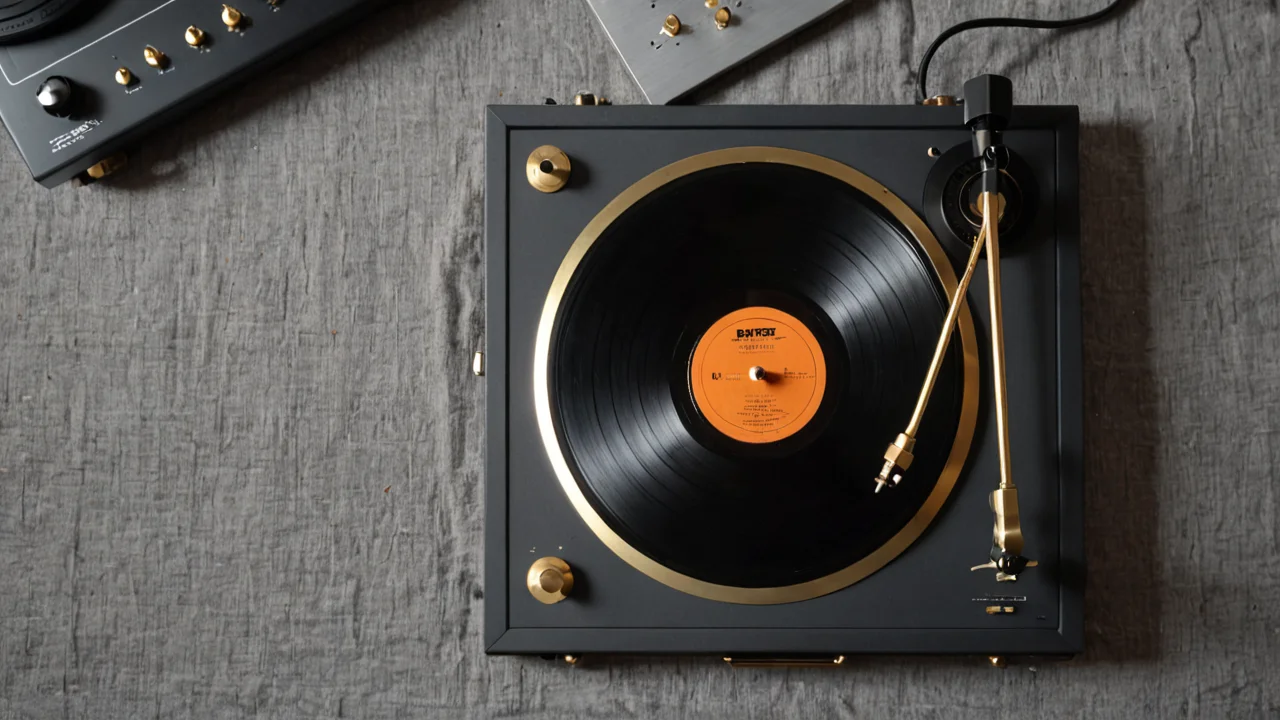
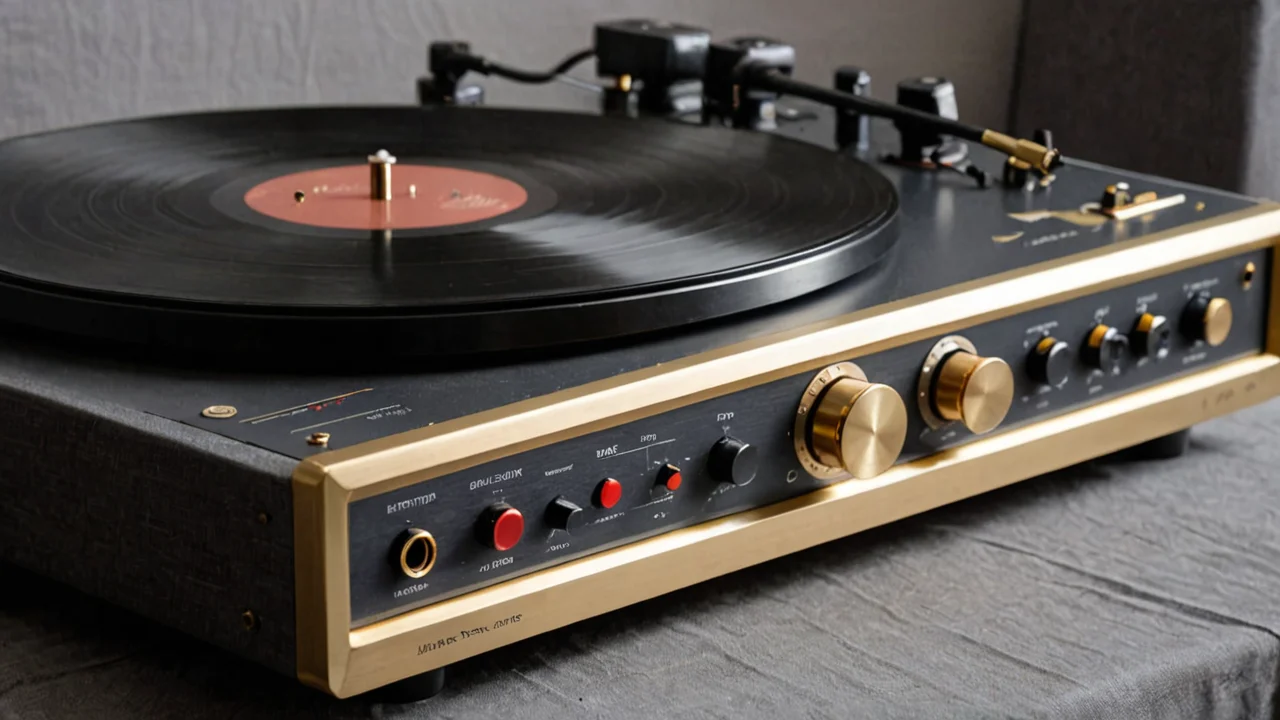
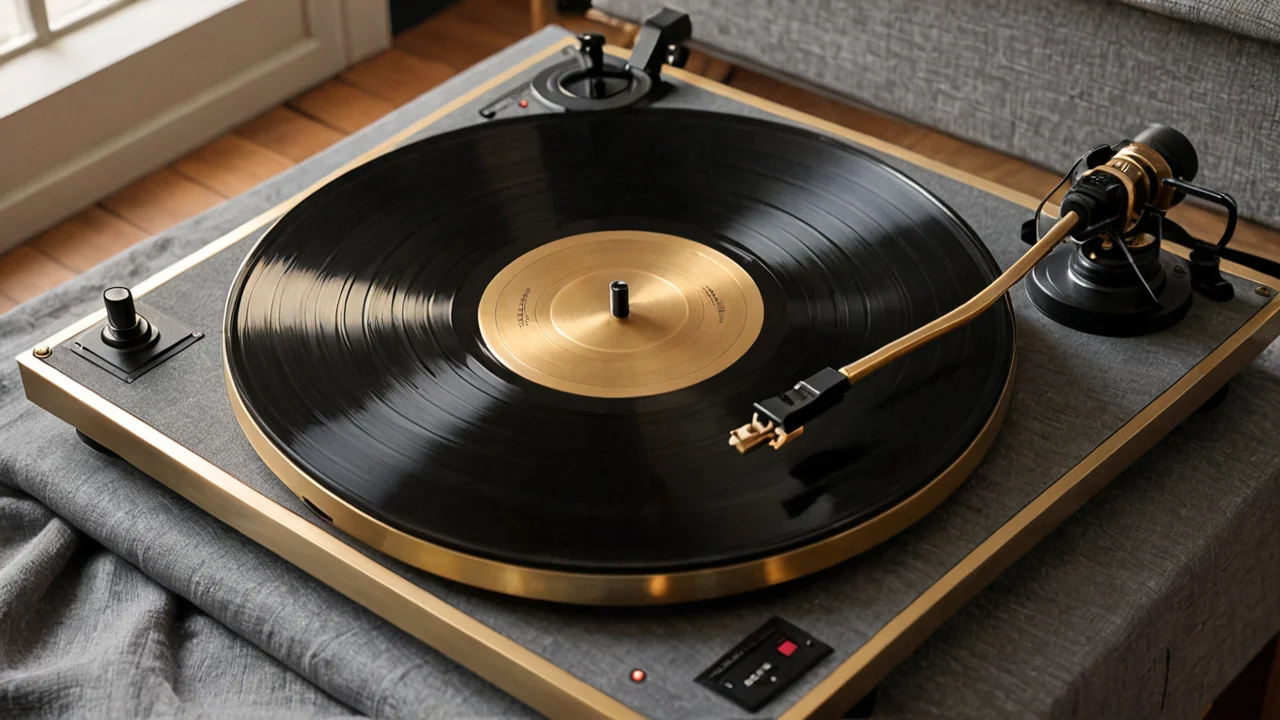
Almost every vinyl purchase decision comes down to where you put your money along the signal chain, and the honest answer is that the cartridge and stylus matter more than the turntable's chassis, the plinth material, or the brand on the platter mat. A competent deck with a well-aligned, correctly loaded cartridge will outperform an expensive deck with a mistracked one every time. The rest of this page is about how to allocate a budget across that chain, which specifications actually constrain your choices, and where the money stops buying audible improvement.
Spend on the transducer first, the furniture last
A turntable is a speed-holding platform; the cartridge is the thing that actually reads the groove. That asymmetry should drive your budget. If you have a fixed sum to spend, a modest direct-drive or belt-drive deck with a properly set-up moving-magnet cartridge will beat a heavier, prettier deck fitted with whatever cartridge the factory bundled in and never aligned.
Moving-magnet (MM) cartridges are the sensible starting point for almost everyone. They put out a healthier signal, they work with the moving-magnet input on nearly every integrated amp and phono stage, and their styli are user-replaceable — you pull the old one off the cantilever assembly and push a new one on, no re-wiring, no sending the body back. Moving-coil (MC) cartridges are lower output, usually need a step-up transformer or a dedicated MC stage, and typically require a retip or exchange rather than a stylus swap. The step up in cost is real and the step up in performance is conditional on the rest of your system being quiet enough to hear it.
What you give up by staying with MM is mostly the last word in low-level detail and the sense of space around instruments. What you keep is a broad compatibility net, cheap consumables, and the ability to experiment. For most listeners with a midrange deck and a modest phono stage, that is the right trade.
The order of spending that holds up: cartridge and stylus first, then a phono preamp that matches it, then the deck itself, and only then isolation, mats, and clamps. A record weight is not going to fix a cartridge tracking at the wrong force.
Tracking force is a range, not a number
Set tracking force inside the manufacturer's range and you will not damage your records; set it at the top of the range for a little more groove-tracing security, or at the bottom for slightly less stylus and record wear. Manufacturers publish a window because the right value depends on your tonearm's effective mass and the record's condition. The Audio-Technica AT-VM95E, a cartridge found on a great many entry-level and midrange turntables, specifies 1.8–2.2 g with 2.0 g as the standard. The Ortofon 2M Red specifies 1.6–2.0 g, with 1.8 g (18 mN) recommended.
Those two windows overlap, but they are not the same, and that matters when you swap cartridges. A deck set up for the 2M Red at 1.8 g is already inside the AT-VM95E's range, but a deck set up at the bottom of the AT's window (1.8 g) sits at the top of the Ortofon's. Always reset the force with a proper gauge when you change cartridges — the numbered ring on the tonearm counterweight is a convenience, not a measurement.
The cost of getting this wrong runs both ways. Too light and the stylus skips on loud passages, mistracks on inner grooves, and produces distortion that sounds like a bad pressing. Too heavy and you accelerate wear on both the stylus and the record, and the damage is cumulative and silent until it isn't. Tracking force is also not a substitute for alignment: a cartridge that is misaligned in the headshell will mistrack even at the top of its range.
The limit of the range is this: it tells you what the cartridge can survive, not what your arm is doing. A high-mass tonearm paired with a high-compliance cartridge will resonate in the audible band regardless of where you set the force. If you hear a boomy, thickened lower midrange that appears only on certain records, suspect arm-cartridge mismatch before you touch the counterweight.
Alignment, overhang, and the numbers nobody checks
Alignment is the single most consequential setup step and the one most often skipped. The stylus has to sit at the correct vertical tracking angle and the cartridge body has to be square in the headshell, or the stylus will ride the groove walls at the wrong attitude and you will hear it as harshness on sibilants and a collapsed stereo image. The AT-VM95E specifies a vertical tracking angle of 23°, which is close to the standard most decks are designed around; a cartridge with a markedly different VTA will need shimming at the headshell or a change in arm height if your tonearm allows it.
Overhang — how far the stylus sits past the tonearm pivot — sets the arc the stylus traces across the record. Get it wrong and the distortion will be audible at the start and end of the side but not the middle, or vice versa. Most decks ship with an alignment protractor or a simple overhang gauge; use it. A printed protractor from a reputable source is fine. The cost is an afternoon and a small screwdriver; the benefit is the difference between hearing your records and hearing your setup mistakes.
Anti-skate is the third leg. It should roughly mirror the tracking force, but the exact value is a compromise because the skating force changes as the stylus moves across the record. Set it so a blank or smooth test surface lets the arm drift slowly inward rather than skating across. If your deck has no anti-skate adjustment, that is a real limitation, not a fatal one — but it is one more reason a cheap deck with a fixed arm is a poor host for an expensive cartridge.
Where alignment advice breaks down: on a deck with a fixed, non-adjustable headshell and no slot for overhang adjustment, you are stuck with the factory geometry. In that case, buy a cartridge that matches it rather than fighting it. The AT-VM95E's 23° VTA and its 20–22,000 Hz frequency response make it a forgiving match for a lot of fixed-geometry arms, which is a large part of why it turns up on so many decks.
What the spec sheet will and won't tell you
Frequency response and tracking ability are the two figures worth reading, and neither one tells you how a cartridge sounds. The AT-VM95E's 20–22,000 Hz response describes the range it can reproduce, not how flat it is within that range. A cartridge can be specified to 22 kHz and still have a bright, forward upper midrange that makes worn records unlistenable. The Ortofon 2M series is rated for tracking ability of 70 µm at 315 Hz at recommended tracking force — a measure of how well the stylus stays in the groove on a test record's high-amplitude bands. Higher is better, and it is a more useful number than frequency response for predicting whether a cartridge will handle loud, dynamically cut records without breaking up.
What the sheet will not tell you: compliance (how stiff the cantilever suspension is), which determines arm matching; output voltage, which determines whether your phono stage has enough gain; and the stylus profile, which determines how much of the groove wall you actually contact. A line-contact or microlinear stylus reads deeper into the groove than a conical or elliptical one and can sound dramatically better on worn records — or dramatically worse, because it reads damage the shallower tip skips over.
Tracking force and VTA are the specs that constrain setup. Frequency response and tracking ability are the specs that hint at performance. Everything else is marketing until you hear it in your own system. The honest limit of spec-sheet reading is that two cartridges with near-identical numbers can sound completely different, and the only reliable test is your own records on your own deck.
The phono stage is not optional and not neutral
A turntable does not produce a line-level signal. The cartridge's output has to be amplified and equalized by a phono preamp before it reaches your amplifier or speakers — the RIAA equalization curve is baked into every vinyl record, and the preamp reverses it. Skip the phono stage, or plug a turntable into a line input, and you get almost no volume and a thin, screechy tonal balance.
Most integrated amplifiers from the vinyl era have a phono input built in. Most modern ones do not. Check before you buy. If yours doesn't, a standalone phono preamp is the second most important purchase after the cartridge, and it must match the cartridge's type and output. An MM stage will not drive a low-output MC cartridge properly; you need either an MC-capable stage or a step-up transformer.
Loading matters too. MM cartridges expect a standard 47 kΩ input with a few hundred picofarads of capacitance, and getting the capacitance wrong shifts the high-frequency response — too much capacitance and the top end rolls off and the sound goes dull. Some phono stages let you adjust capacitance; most don't. If you are choosing between two otherwise similar preamps, the one with adjustable loading is the better long-term buy.
What you pay for in a phono stage is mostly a quiet power supply and a well-implemented gain stage. Cheap ones hum, pick up RF, and add noise that you hear as a hiss under quiet passages. The cost of upgrading is real, but so is the cost of buying a deck and cartridge that out-resolve a noisy budget stage — you will hear the stage, not the records. The point of diminishing returns arrives sooner than most people expect; a competent, quiet MM stage is enough for a midrange moving-magnet cartridge, and spending more on the preamp than the cartridge is usually the wrong ratio.
Stylus wear, cleaning, and the consumable you keep forgetting
The stylus is a wear item. It is a small diamond tip, usually, attached to the cantilever, and it degrades with every hour of play. A worn stylus mistracks, distorts on loud passages, and — this is the part people miss — damages records as it goes. Replace it on schedule rather than waiting for obvious distortion, because by the time you hear it clearly, the records it has been playing have already taken the wear.
Cleaning is not optional either. Dust and grit on the stylus act like sandpaper in the groove. Brush the stylus back-to-front with a proper stylus brush before and after each side, and use a record brush on the vinyl itself. Wet-cleaning records is a bigger commitment and a bigger payoff on secondhand vinyl, but a dry brush removes the loose material that does the most immediate damage. The cost of neglecting this is accelerated stylus wear and noisy playback; the cost of doing it is about ten seconds per side.
When to replace is the question nobody can answer precisely for you. Stylus life depends on tracking force, record condition, and how clean you keep things, and manufacturers' figures vary enough that a fixed hour count is misleading. The practical approach: track your playing time roughly, replace when you hear increased sibilance or mistracking that alignment and tracking force can't fix, and treat a secondhand deck's unknown stylus as due for replacement on day one. On a cartridge like the AT-VM95E, the stylus is a user-replaceable part, so the replacement is cheap and doesn't require re-aligning the cartridge body.
The trade-off in all of this is time against money. A properly aligned, correctly forced, regularly cleaned setup with a modest cartridge will sound better and last longer than an expensive cartridge treated carelessly. The upgrade path that actually works is not buying up the range — it is getting the setup right on what you have, then spending on the transducer when you know what your system is doing wrong.