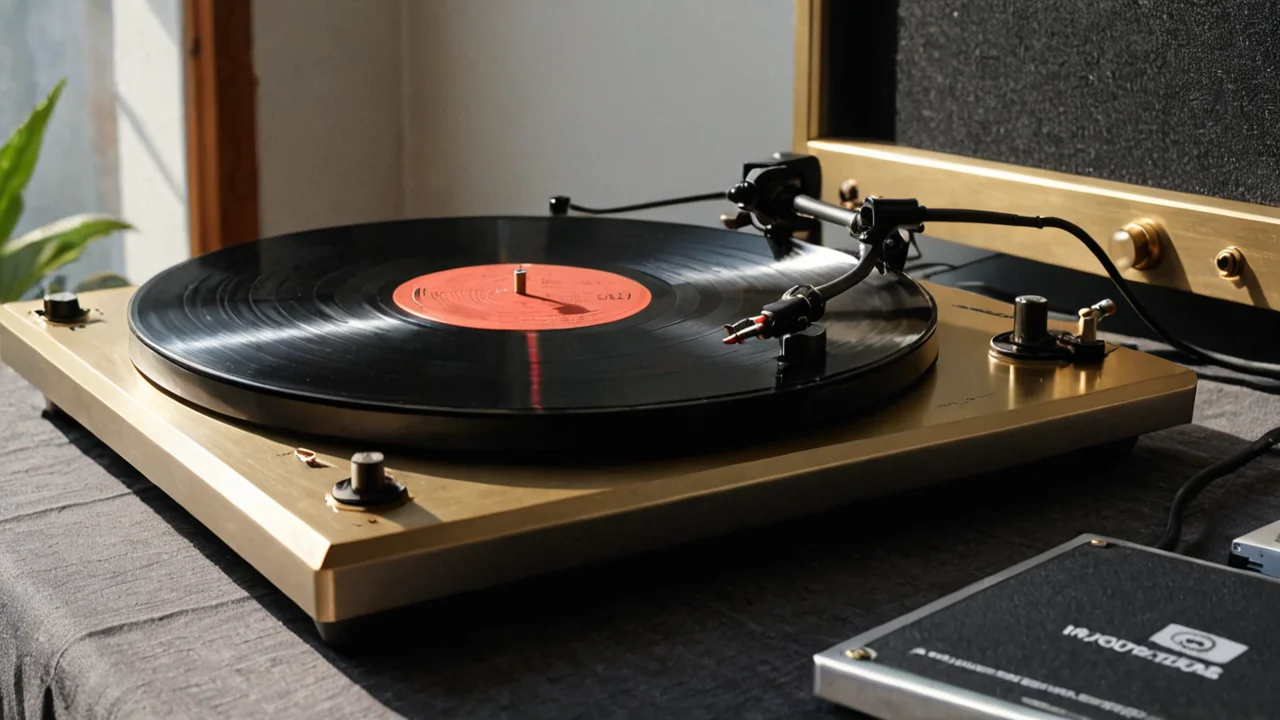
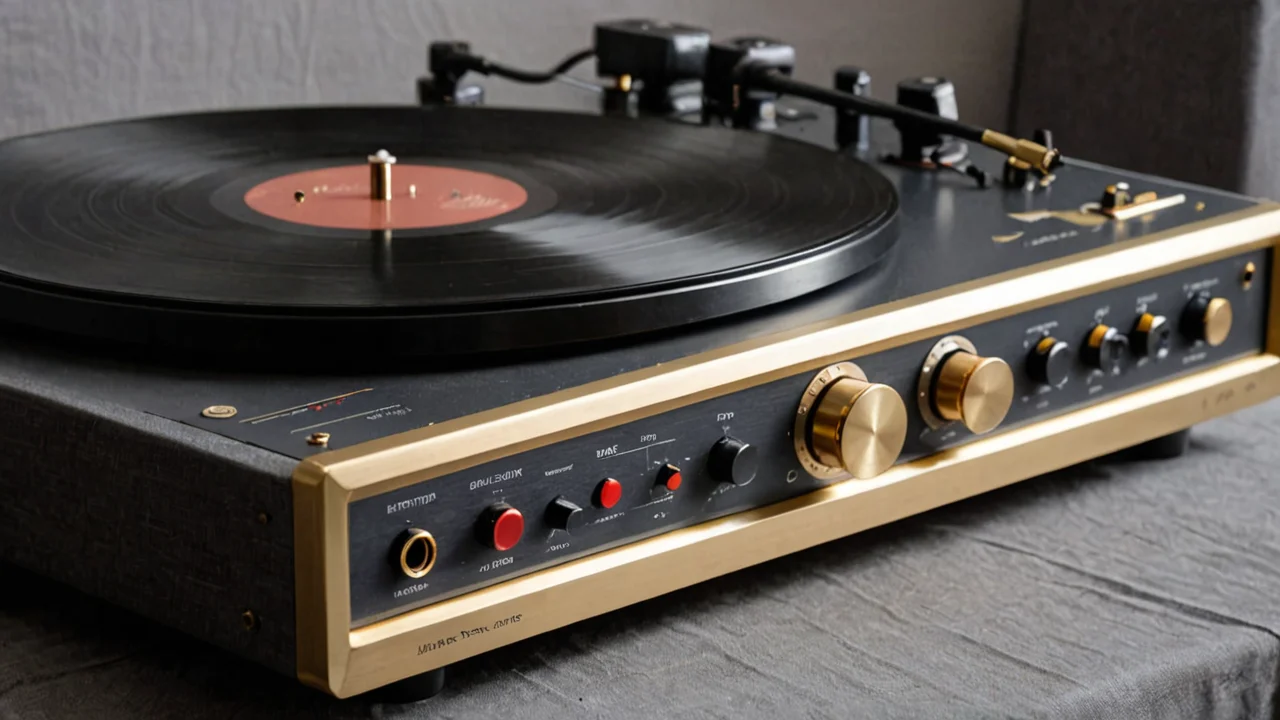
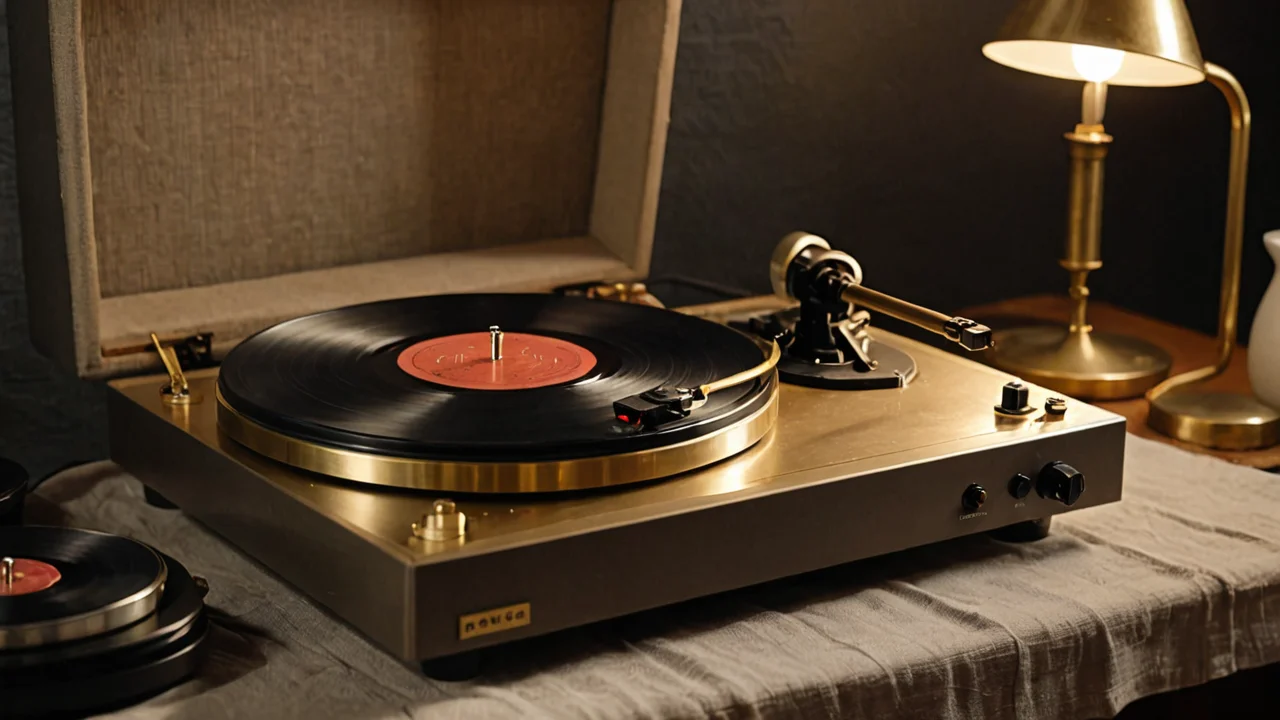
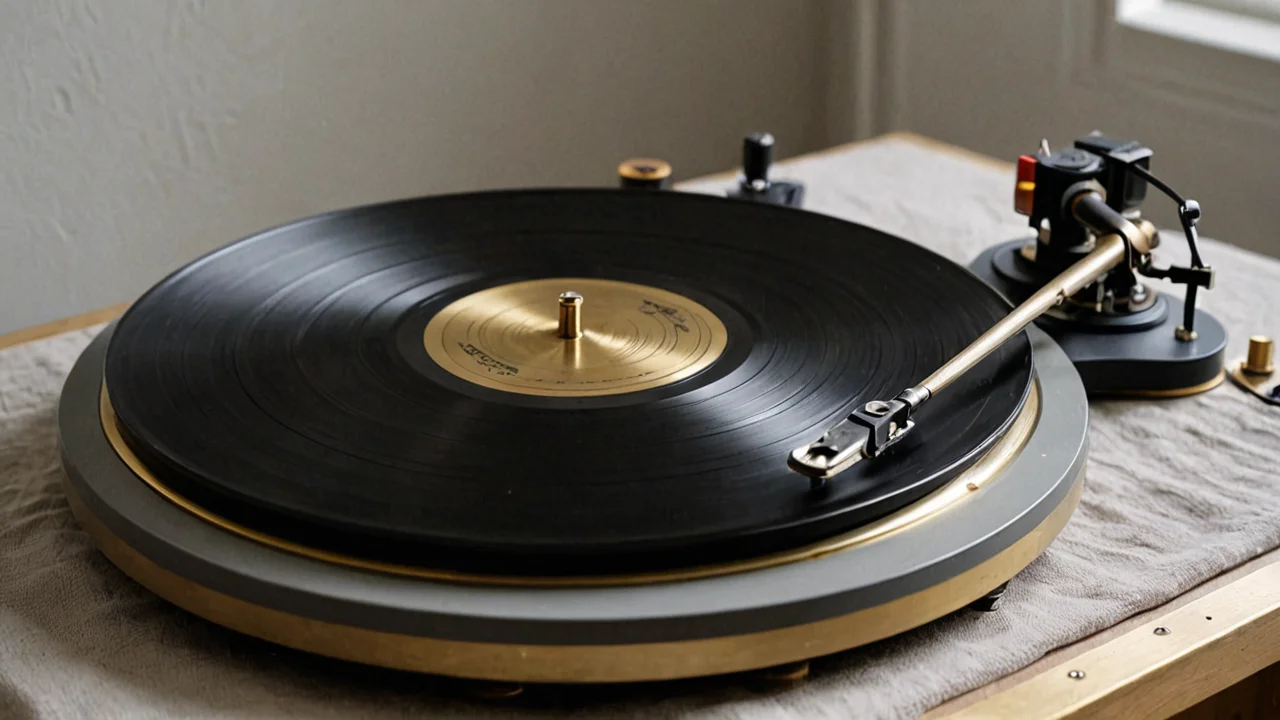
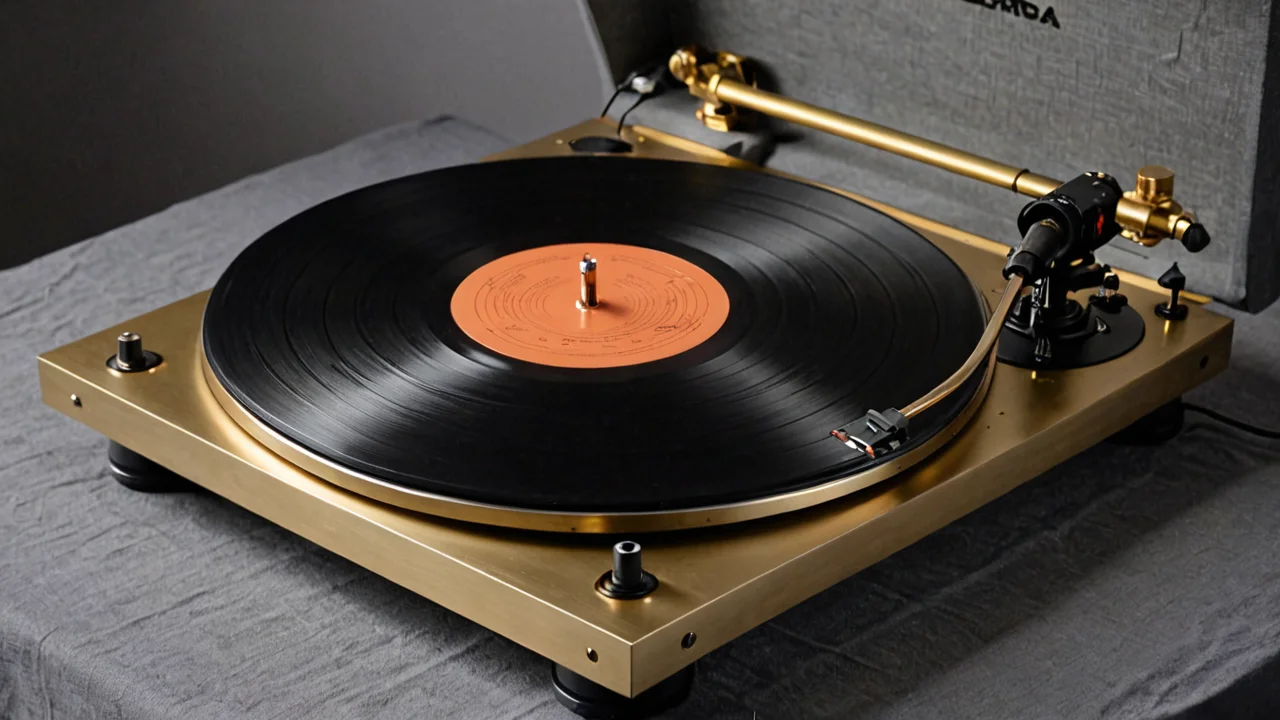
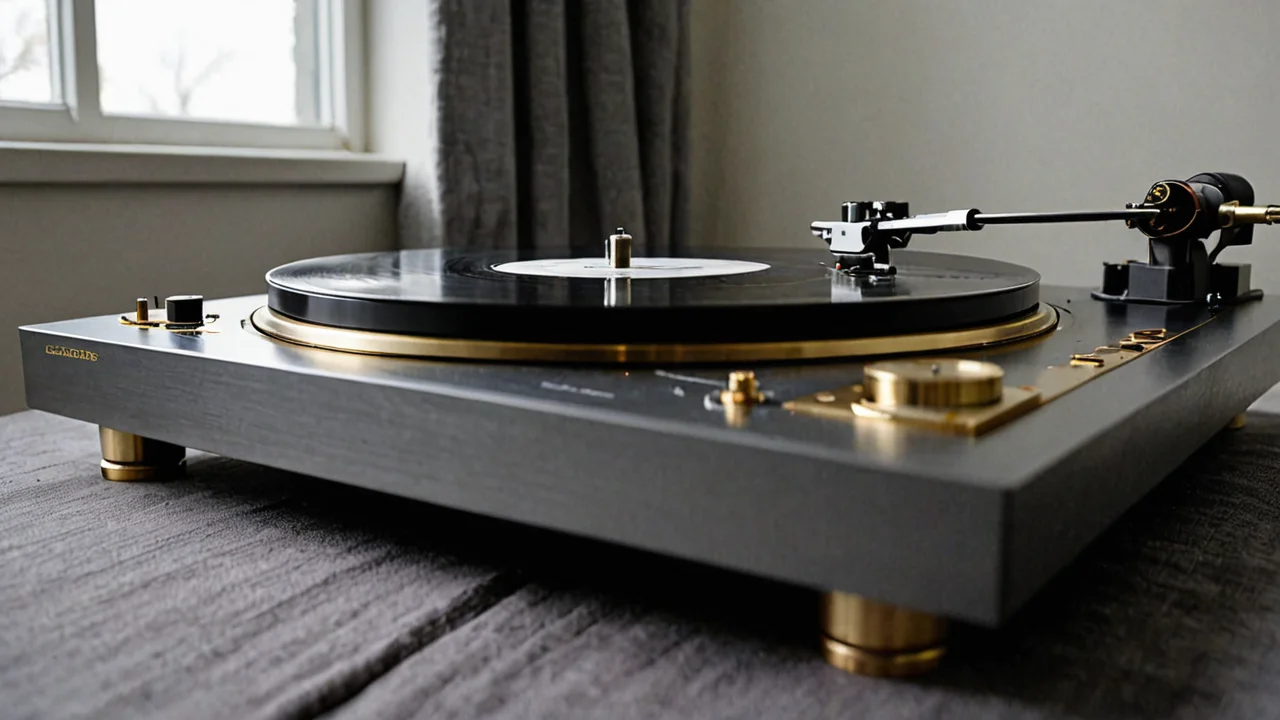
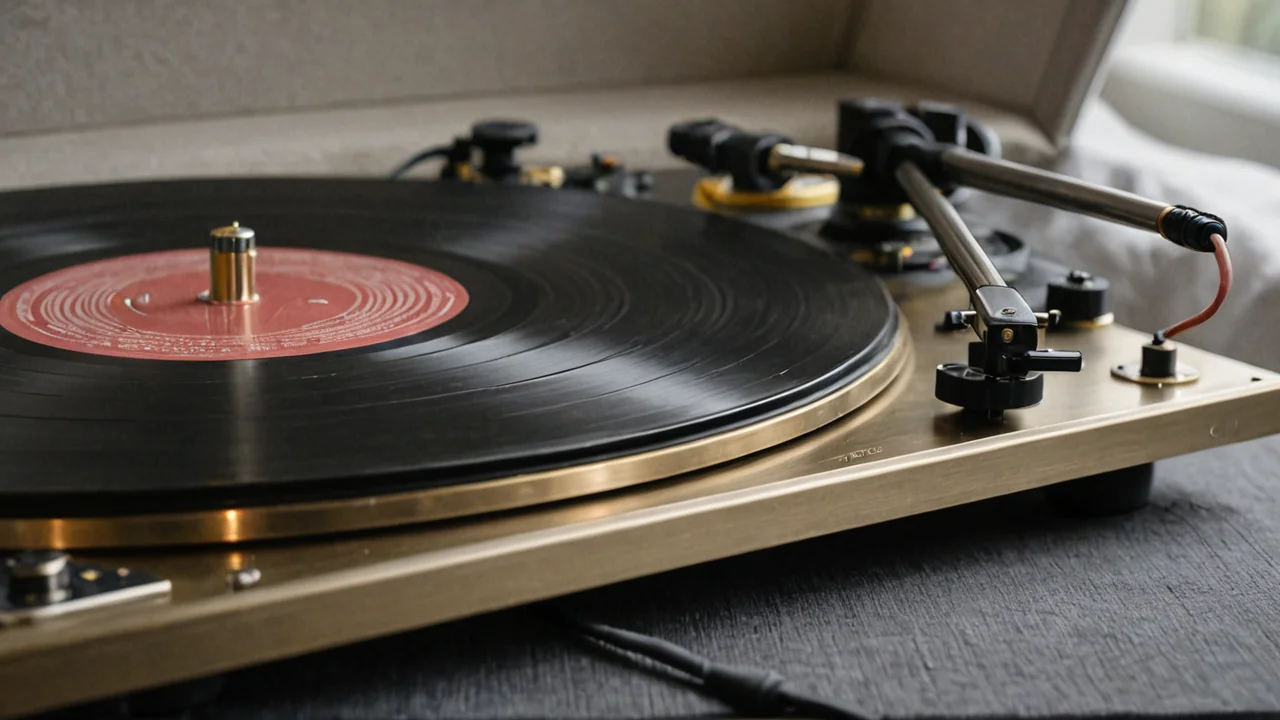
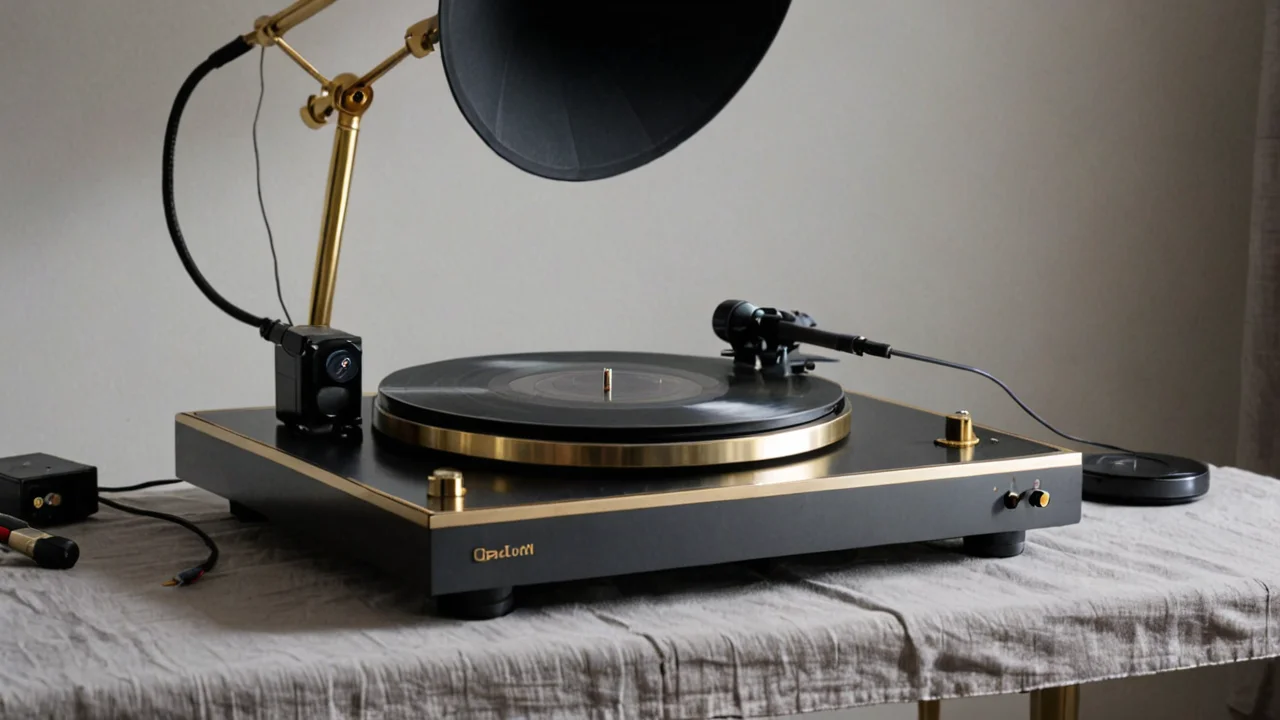
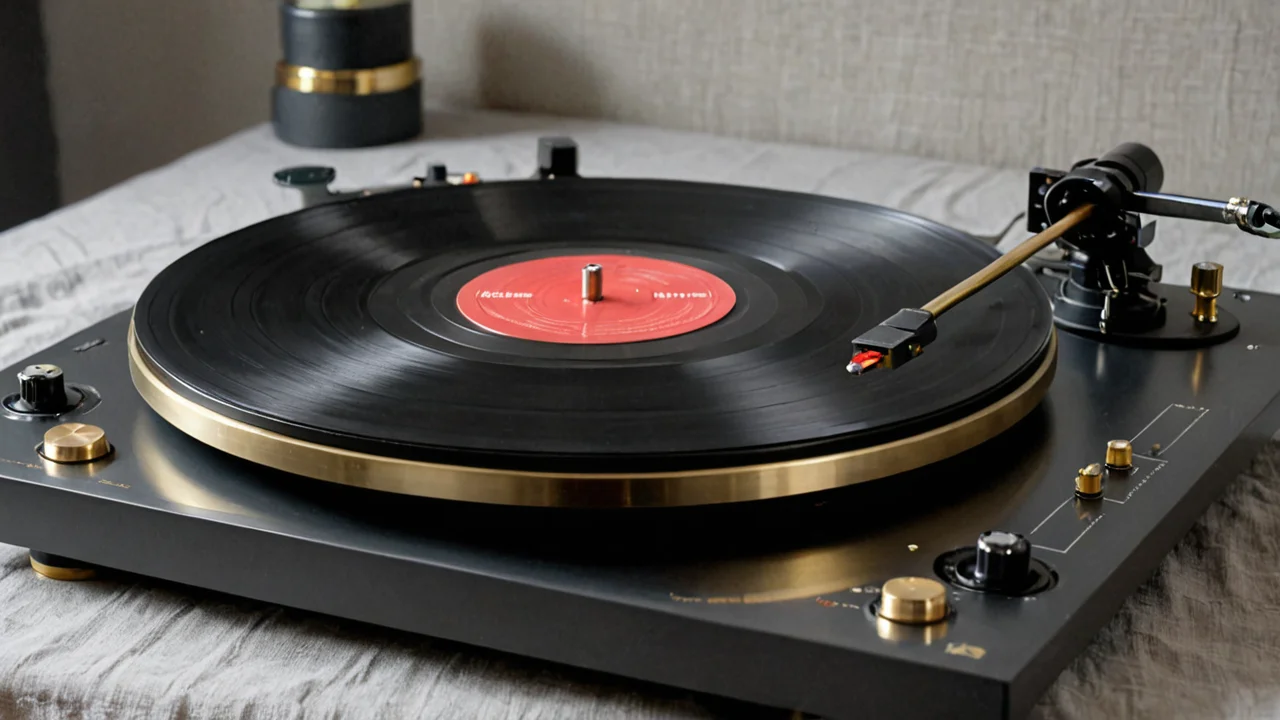
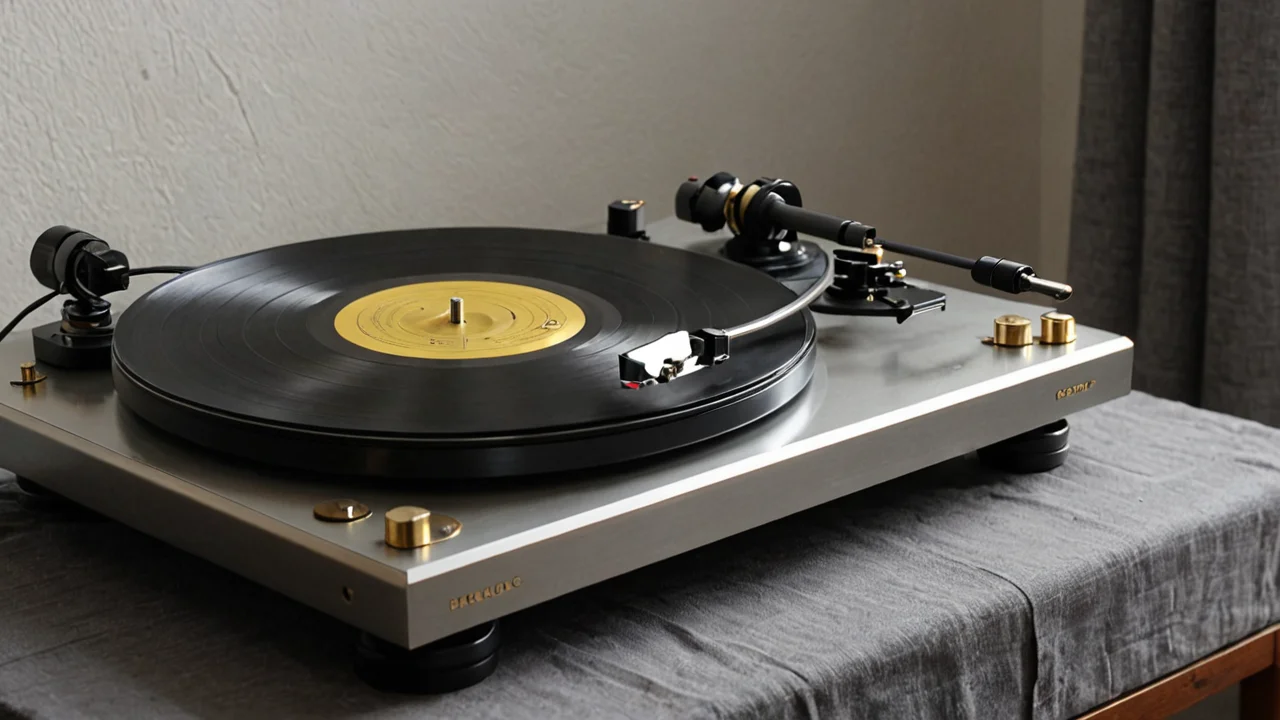
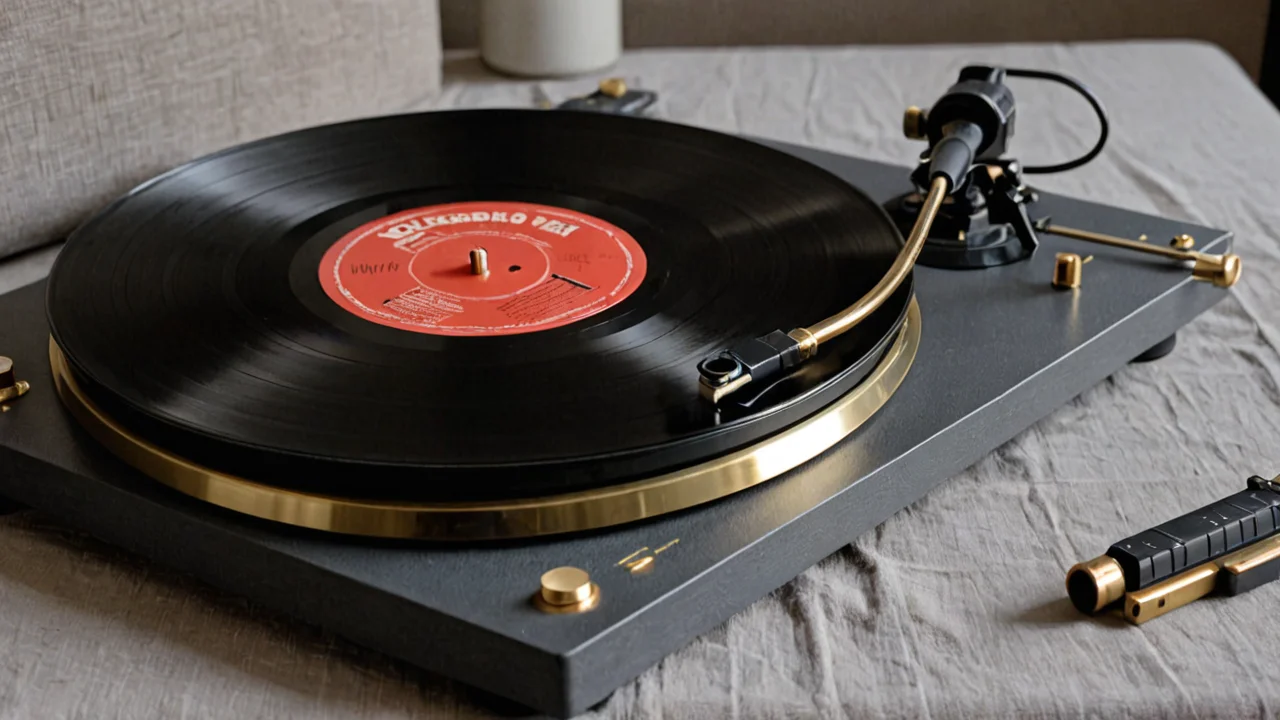
A record player is a mechanical system with an electrical tail, and almost every problem people blame on "vinyl" comes from one of four adjustment points: the speed the platter turns, the force the stylus presses into the groove, the alignment of the cartridge body relative to that groove, and the gain and loading the phono preamp applies to the tiny signal that comes out. Get those four right and a modest deck sounds clean and stable. Get any one of them wrong and no amount of money spent on the next component upstream will fix it. The signal path is short and every stage is audible: cartridge, tonearm wiring, phono stage, line stage, power amp, speakers, room.
How the groove becomes sound, and where the signal is fragile
A turntable spins the record at a constant speed while the tonearm, cartridge and stylus convert the groove's modulations into an electrical signal, which a phono preamp must then amplify and equalize before anything reaches a speaker. That equalization is not optional colour — it is the RIAA curve, applied at cutting time and reversed at playback, and without it the bass is thin and the treble is unbearable. The cartridge is an electro-mechanical transducer: a stylus, usually a diamond tip on a cantilever, rides the groove and generates a small voltage. Moving-magnet designs put a magnet on the cantilever and fixed coils in the body; moving-coil designs invert that and put the coils on the cantilever, which is why they are typically lower output, more expensive, and usually need a step-up device or a phono stage with more gain.
The fragility is in the numbers. A moving-magnet cartridge puts out a few millivolts, and that signal travels down a short run of very low-capacitance cable into a stage that has to add roughly 40 dB of gain without picking up hum or radio interference. This is why cable length and routing matter more here than anywhere else in a system, and why a phono stage placed next to a power transformer will hum no matter how much it cost. The stylus itself is a wear item: it must be kept clean and periodically replaced, and a worn or dirty tip damages records permanently — the damage is cut into the plastic, not played back. You notice it as a dulling of the top end that cleaning does not restore, and by then the record is the casualty.
The honest limit of all this: the format's noise floor is baked in. Surface noise, pressing quality, and the physical wear of the groove set a ceiling that no component upgrade removes. Digital does quiet and dynamic range better as a matter of course. Vinyl's case rests on mastering choices, the physical ritual, and the fact that many pressings of older material were cut from sources that never made a clean digital transfer — not on measured fidelity.
Setting up the deck: speed, force, alignment, in that order
Set speed stability first, then tracking force, then alignment, then azimuth and anti-skate. Speed is the foundation because everything downstream assumes it is correct: a platter running fast or slow shifts pitch and makes every other adjustment moot. Use a strobe or a phone app that reads platter speed over a full revolution, not a glance at the marker. Belt-drive decks drift as belts stretch; direct-drive decks hold speed but can transmit motor cogging if the platter is light and undamped. Neither topology is inherently better — belt drive isolates the motor, direct drive holds pitch — and the trade-off is real in both directions.
Tracking force is the downward pressure the tonearm and cartridge exert on the stylus, measured in grams or millinewtons, and it must sit inside the manufacturer's specified range to balance tracing accuracy against excessive record and stylus wear. The Audio-Technica AT-VM95E, which ships on a great many entry and midrange decks, specifies 1.8–2.2 g with a standard 2.0 g. The Ortofon 2M Red specifies 1.6–2.0 g, recommended 1.8 g (18 mN). Set it with a digital gauge at the record surface height, not with the tonearm's own numbered dial, which is a rough guide at best. Too light and the stylus skips on transients and mistracks loud passages; too heavy and you accelerate groove wear and flatten dynamics. The mistracking you hear first is on the inner grooves and on loud, heavily modulated passages — sibilants break up, piano turns glassy.
Alignment means getting the cartridge body square and the stylus at the correct point in the arc so that tracking error stays low across the side. Vertical tracking angle matters here: the AT-VM95E specifies 23°, and if the tonearm sits tail-up or tail-down relative to the record, the stylus contacts the groove wall at the wrong angle and you trade high-frequency detail for distortion. The usual symptom of a badly aligned cartridge is that one channel is louder or brighter than the other, or that inner tracks sound congested compared with outer ones. Anti-skate is the last adjustment and the one most often set wrong — set it too high and the stylus pulls to the outer wall, too low and it pulls inward on loud passages.
The cost of all this is time and a couple of tools: a digital tracking-force gauge, an alignment protractor, and a test record. That is a modest outlay against the price of a replacement stylus or a ruined record. What it buys is the removal of the largest variable in the whole system. What it does not buy is a better cartridge — a well-set budget cartridge will outperform a badly set expensive one every time, and that is the single most useful thing to know before spending anything.
Cartridges and styli: the choice that defines the sound
Choose the cartridge for your tonearm's effective mass and your phono stage's gain and loading, not for a review's description of its tonal character. A high-compliance cartridge on a heavy arm will resonate at the wrong frequency and sound boomy or thin; a low-compliance moving coil on a light arm will skip and mistrack. The AT-VM95E's frequency response is quoted as 20–22,000 Hz, which tells you the electrical bandwidth is not the limiting factor — the mechanical interface and the record are. What the specification does not tell you is how the cartridge behaves on a difficult, loudly cut record, and that is the number that actually predicts satisfaction.
Tracking ability is where the specs earn their keep. Ortofon quotes the 2M series at 70 µm at 315 Hz at recommended tracking force on a test record — that is a measure of how well the stylus stays in the groove on heavily modulated passages, and it separates cartridges that sound composed on loud music from ones that sound nervous. A cartridge that tracks well at its recommended force will sound cleaner on the last track of a side than one that needs to be run at the top of its range to stay put.
The upgrade path has a shape worth knowing. Moving-magnet cartridges are cheap, high-output, and have user-replaceable styli — you can wear out a tip and swap it without replacing the body. Moving coils are usually not user-serviceable; the stylus is not replaceable in the field, and a worn tip means a rebuild or a new cartridge. That is the trade: better mechanical detail and lower moving mass against a much higher cost of ownership. For most listeners the sensible sequence is to exhaust the moving-magnet options and the setup first, because a properly aligned moving magnet at the right force is not the weak link in a system built around a budget deck. The wrong choice here is buying a moving coil before the phono stage can supply the gain and loading it needs — the result is hiss, thin bass, or both.
The phono stage: where most budget systems lose the most
Spend on the phono stage before you spend on the cartridge, up to a point, because the phono stage is doing the hardest job in the chain. It has to apply the RIAA curve accurately, supply enough gain for the cartridge's output, and present the correct load — typically 47 kΩ for moving magnet, and a much lower, often adjustable impedance for moving coil. Get the loading wrong on a moving coil and the frequency response tilts audibly: too low a load rolls off the treble, too high and it can peak. Many inexpensive stages offer no loading adjustment at all, which quietly locks you out of most moving coils.
The practical hierarchy: first make sure the stage has enough gain that you are not running the volume control near the top of its range, because that amplifies the stage's own noise along with the music. Second, check that its RIAA accuracy is decent across the band — a stage that is down in the bass will make every record sound lightweight and will send you chasing speaker placement for a problem that lives in a small box. Third, worry about loading options only if you intend to run moving coil. A separate, well-shielded stage placed away from the turntable and the power amp will usually beat a stage built into a receiver, because the built-in one shares a chassis with a transformer.
The limit is that a phono stage cannot add information the cartridge did not retrieve. If the stylus is worn, mistracking, or misaligned, a better stage will faithfully amplify the distortion. This is why the order matters: setup, then stage, then cartridge, then everything downstream. People routinely invert it, buy an expensive cartridge, hear no improvement because the alignment is wrong, and conclude that vinyl is a con. It is not; it is just unforgiving of sequence.
Amplification and speakers: matching the load, then the room
Match amplifier power to speaker sensitivity and impedance before you listen to anything else. A low-sensitivity speaker with a demanding impedance curve needs an amplifier with real current delivery; a high-sensitivity speaker will run happily on a few watts and will expose an amplifier's noise floor instead. The specification that matters is the minimum impedance the speaker presents and how the amplifier behaves into it, not the headline wattage. An amplifier that doubles its output as impedance halves is comfortable driving difficult loads; one that does not will clip on transients, and clipping sounds like harshness rather than like a lack of volume.
Speaker placement is the cheapest and largest single improvement available, and it is free. Distance from the front and side walls sets the balance between direct sound and room reflections; the listening position relative to those walls sets how much of the room you hear. Move the speakers a few inches and the bass changes more than swapping amplifiers will. Treat the first reflection points and the wall behind the listening position before buying anything, and accept that a room with hard parallel surfaces and no soft furnishings will never sound clean no matter what is in it.
The trade-off is that room treatment costs space and domestic goodwill, and most people will not do it. The compromise is nearfield listening — speakers close to the listener, so the direct sound dominates the room — which is why small rooms often reward small speakers and nearfield setups over large ones. What you cannot do is buy your way out of a bad room with electronics. The room is a component, it is in the signal path, and it is the one most listeners never adjust.
Records, wear, and the maintenance that actually matters
Clean the record and the stylus before every side, and replace the stylus on schedule rather than on sound. A carbon-fibre brush for dry dust and a wet clean for new or used records removes the grit that grinds into the groove under the stylus; a dirty record wears faster and sounds worse, and the wear is not reversible. Stylus life is finite and the manufacturer's figure is a guide, not a guarantee — a tip that has been run at too high a force, or through dirty records, wears out early. The warning sign is increasing sibilance and a loss of treble detail on records you know well, and by the time it is obvious the tip has been polishing the groove rather than tracing it.
Pressing quality varies enormously and is worth understanding before you blame your system. Warps, off-centre pressings, non-fill, and surface noise are manufacturing defects; a warp that makes the tonearm rise and fall is not a tracking-force problem, and no adjustment fixes a badly pressed record. Check a new record on a flat surface before you conclude your deck is at fault. Store records vertically, keep them out of heat, and use inner sleeves — the paper sleeves most records ship in shed fibres and scuff the surface.
The honest costs: vinyl is expensive per album, takes up space, requires maintenance, and is less convenient than any alternative. It rewards a listener who wants to sit with a side and not skip. What it does not do is deliver objectively better sound than a good digital front end at the same price — the case for it is the mastering, the physicality, and the fact that a well-set budget deck playing a clean pressing is genuinely satisfying. The failure mode is spending on upgrades to solve problems that are setup, room, or pressing defects, and the discipline is to fix the free and cheap things first: speed, force, alignment, cleaning, placement. Do those and the format does what people say it does. Skip them and it never will.